How Claude Code rendered Cat Garden, a 110-second film from source
Try the related Flowith workflow
On this page
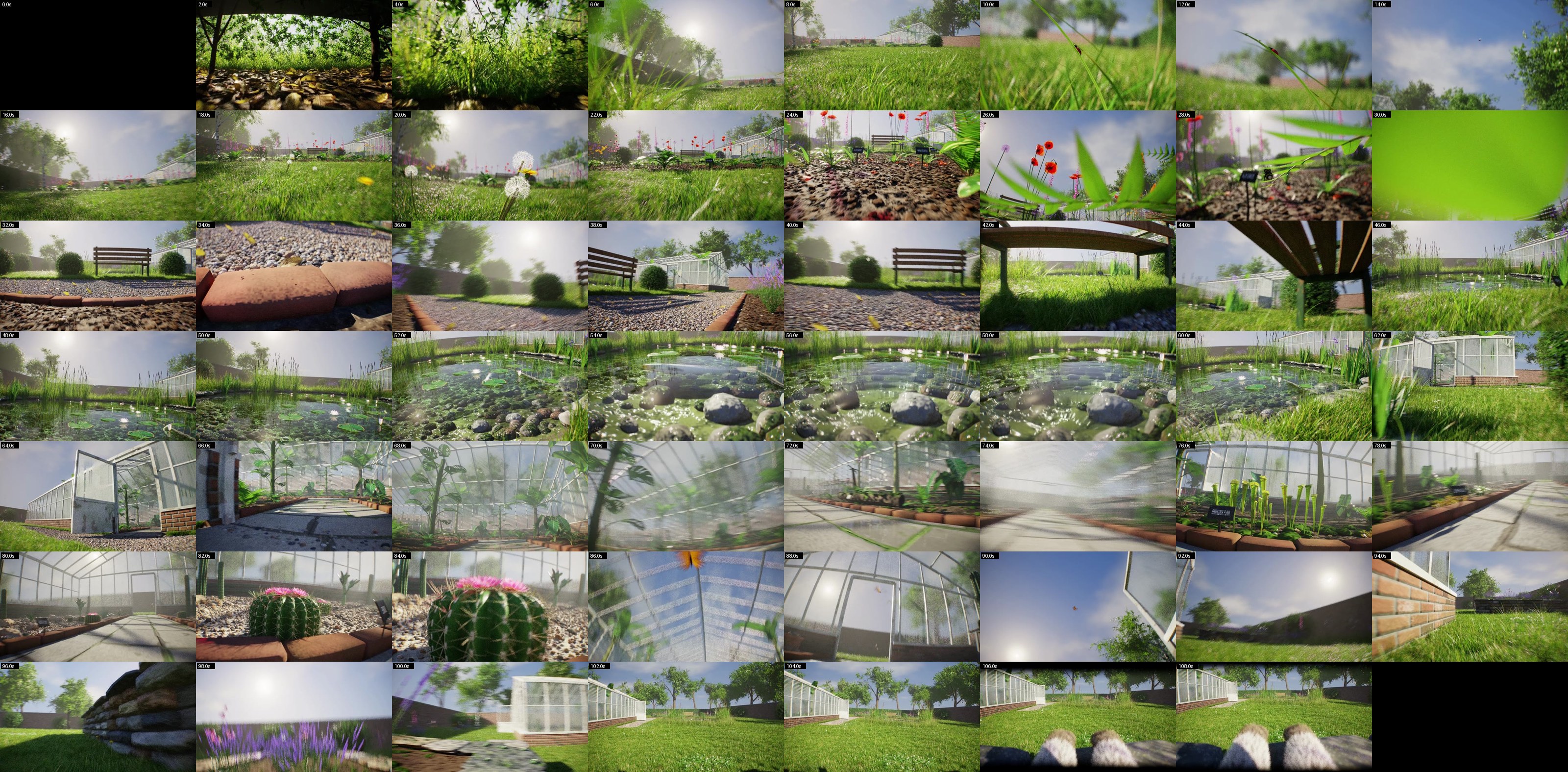
Grass brushes the lens on the way into the garden. By the pond, pebbles are large enough to fill the foreground. The camera moves at a cat’s eye level through both places in a single shot. The film is Cat Garden, from BubbleBrainBB’s awesome-fable-5.2 project. The author published the scene code, camera path, synthesized soundtrack and a custom Metal path tracer. On Flowith, the creator asked Claude Code to pull the existing project and render the film on their machine.
Open the public Flowith canvas to inspect the original MP4, frame sheet and quality reports. The player above streams a compressed copy of the full film.
What changed for the base M4
The original project specifies 1920 × 1080 with 16 samples per pixel. On the base M4 with a 10-core GPU, the canvas run notes report that one difficult frame at the original settings took 28.6 seconds. The agent switched to 1280 × 720 and eight samples per pixel. It kept the scene, motion, soundtrack and 30 fps timeline. The run notes put rendering time at 108 minutes.
That trade is visible. Pause on the grass near the lens, where the softer, out-of-focus areas reveal grain. Then watch the garden bench go by. Its slats are a useful reference for how the camera tracks past a fixed object. Compare other moments on the frame sheet sampled every two seconds.
Three places to inspect in the film
| Time | What to watch or listen for |
|---|---|
| 0:49 | Pause at the pond. Reeds and stones close to the camera give the waterline its scale. |
| 1:10 | Inside the greenhouse, watch the frame sweep past the planting beds. The changes in near and far objects show how low the camera travels. |
| 1:38 | Listen for the landing, then watch the view back over the greenhouse before the closing blink. |
What the run measured
The public card identifies Claude Opus 5.5 and reports 117 billed Flowith credits for the coding-agent run. The film’s frames were computed on the creator’s Mac. Hardware time and electricity are separate from the agent meter. This figure applies to the recorded run with the existing source project.
The frame report counted 3,300 decoded frames and zero identical consecutive frames. Its black-frame check excluded the deliberate fade and eyelid windows. The checker also flagged 22 candidate dark blocks for visual inspection. The audio report measured −19.6 LUFS integrated loudness and a true peak of −2.1 dBFS.
Which workflow fits your scene?
Cat Garden already had a renderer and a precisely choreographed camera. Starting from the author’s source preserved both. If you want to adjust a camera orbit, lighting or material inside a Blender scene, watch the five-second EEVEE lighthouse turntable and take its Blender brief. For the differences between the two agents available on a Flowith canvas, see the Claude Code and Codex product guide.